As a blogger, we keep building new habits so that we can be more productive. Sometimes, we end up embracing the habits that are not only counter productive habits but can be detrimental for our cause. In this post, I talk about some of the counter-productive habits for the bloggers.

There are so many stories available on the internet which talks about bloggers achieving extraordinary success. These are the motivations which encourage more and more people to follow the path and achieve their dreams.
But, that’s not the end of it, there are so many untold stories of failures which usually doesn’t come in front of the readers. The failures are more in numbers but we still choose to get motivated by the success stories.
What a key factor to differentiate between a success and a failure?
Usually, it’s the person and the rigorous which he has put in the work to achieve that success. We usually look at the success but miss the small habits and dedication which the person has shown to achieve that success.
As there are small habits which helps in achieving success, similarly there are counter-productive habits which can lead to a downfall. Most of the people do not recognize if they are falling in a trap of unproductive habits and wasting a lot of time which can be used to achieve success.
Counter Productive Habits For Bloggers
I read something years ago that stuck with me. It was from the book 13 Things Mentally Strong People Don’t Do — the idea that good habits matter, but it’s often the bad ones that stop you from reaching your potential.
That hit home. I’ve been blogging for over a decade now, and looking back, my biggest growth spurts didn’t come from learning something new. They came from stopping something that was quietly wasting my time.

So here are 15 counter productive habits I’ve seen — and fallen into myself — that hold bloggers back. Some of these are classic traps. Others are new ones that have crept in with AI tools, changing search algorithms, and the way people discover content in this AI era.
What Are Counter productive Habits for Bloggers?
Counter productive habits for bloggers are recurring behaviours that feel productive but actually slow down blog growth, waste time, or damage content quality. They range from obsessing over analytics to relying too heavily on AI-generated content.
These habits are tricky because they disguise themselves as work. You feel busy. You feel like you’re making progress. But the blog isn’t growing — and that’s the tell.

Obsessing Over Data And Metrics

I get it. You publish a new article and want to see how it’s doing. So you check Google Analytics. Then Search Console. Then your ad dashboard. Then you check again an hour later.
This is one of the easiest traps to fall into. Checking stats multiple times a day doesn’t change the numbers — it just eats into the time you could spend creating your next piece of content.
None of us realizes that when we make a habit of checking the stats too many times, sometimes multiple times in a day.
Here’s what I do instead. I check analytics once a month in detail for my keyword research analysis, and I glance at Search Console maybe every two weeks. That’s enough to spot trends without getting pulled into a daily obsession. If something big happens — a traffic spike or a sudden drop — set up email notifications so you hear about it without having to look.
Constantly Managing Your Task List

Task management tools are supposed to save time. But I’ve seen bloggers spend more time organising their to-do list than actually doing the tasks on it.
If you’re colour-coding, re-prioritising, and moving items between boards every morning, that’s not productivity. That’s procrastination wearing a neat disguise.
The idea of creating a pending task list is to get those tasks done rather than manage the list. So spend more time completing the tasks and stop managing the list too much.
Pick a simple tool — I use Todoist — and limit yourself to three priority items per day. Everything else can wait. The goal is finishing tasks, not curating them.

Never Planning Anything

This is the opposite extreme. Some bloggers just sit down and write whatever feels interesting that day. No editorial calendar. No keyword strategy. No long-term vision.
Random effort gives you random results. I learned this the hard way in my early years — I’d publish articles that nobody was searching for, then wonder why traffic stayed flat.
Set goals that go beyond “publish more articles.” Think about what audience you want to reach, what topics build your authority, and what content actually drives the growth you’re after.
In the end, people are not judged by the effort they put in but with the result, they generate. For gaining a good result, you should be more calculative in terms of how you want to spend your time. The idea should be to create some long term and short term goals for your blog.
The goal should never be to write these many articles rather than audience growth, earning growth, engagement growth extra. Goals should be the one which matters in the long run and will be regarded as a success for your blog.
Trying to Do Everything Yourself

Writing, editing, graphic design, social media, email marketing, SEO, site maintenance — one person cannot do all of this well. I tried for years. It doesn’t work.
At some point, you need to either outsource or automate the repetitive stuff. Tools like SocialBee can handle social media scheduling. A freelance editor can clean up your drafts faster than you can. Your time is better spent on the things only you can do — like writing from your own experience.
The bloggers who grow fastest are the ones who let go of control over the small things.

Chasing Perfection in Every Post

I used to spend days polishing a single article. Adjusting every sentence. Rewriting the intro four times. Swapping out images because none of them felt quite right.
The Pareto Principle applies here. About 80% of your readers are perfectly served by work that took 20% of maximum effort. That last 20% of polish? Most readers won’t notice the difference.
Publish it. Move on. You can always come back and update later — which brings me to a point further down this list.
The Pareto Principle

While creating content always remember The Pareto Principle. The principle states that 80% of the effect comes from 20% of the causes.
The effort which you should spend is in identifying those 20% causes. You should be looking to create a content which can be good enough for your 80% audience and improve it over time to serve additional audience.
If you wait for the content to be ready for your entire audience, you might waste a lot of time before you can publish it. And, based on the principle, you gain may only be around 20% from all that effort.
So stop looking for perfection in everything and make intelligent choices to serve most of your audience.
Only Chasing Big Keyword Wins

Going after high-volume keywords sounds smart. But those keywords come with fierce competition — you’re up against sites with massive domain authority and dedicated SEO teams.
I’ve had far more success targeting clusters of smaller, long-tail keywords. Each one brings modest traffic on its own. But together, they add up to a steady, diversified stream that doesn’t collapse when one ranking drops.
Think of it like investing. You wouldn’t put everything into a single stock. Don’t put all your SEO effort into a single keyword either.
Endlessly Tweaking Your WordPress Theme

This one is personal. I’ve spent entire weekends adjusting fonts, testing colour schemes, and reorganising my sidebar — convincing myself it was “brand building.”
It wasn’t. It was avoidance.
I am in the software industry for almost twenty years by now and most of my initial years I was working with Mainframe Computers. We had a saying – If it ain’t broke, It doesn’t need a fix. The same is true for most of the work which we do on our blogs also.
Your theme needs to be fast, mobile-friendly, and clean. Once you’ve got that, leave it alone. Schedule a design review once a quarter if you must, but don’t let theme tweaking become a substitute for writing. I moved MetaBlogue to GeneratePress and locked down the design so I’d stop fiddling with it.
Working Without Taking Breaks

Blogging from home makes it easy to blur the line between work and rest. You’re always near your laptop. There’s always one more thing to do.
Blogging is a creative work which needs a good state of mind and motivations.
But relentless work kills creativity. I’ve noticed my best ideas come when I step away — during a walk, while cooking, or just sitting with a cup of tea and no screen in front of me.
Take breaks deliberately. They’re not a reward for finishing work. They’re part of how good work gets done.

Replying to Every Single Email

Your inbox will fill up with guest post pitches, link exchange requests, spam disguised as “collaboration opportunities,” and the occasional genuine message.
If you try to respond to every one of them, you’ll lose hours every week with nothing to show for it. I’ve learned to be selective. Genuine reader questions get a reply. Clearly templated outreach gets deleted. You’ll develop a feel for which is which pretty quickly.
Your time has a cost. Protect it.
Publishing an Article and Never Touching It Again

This was one of my worst habits early on. I’d publish a post, feel good about it, and never look at it again. Meanwhile, the information went stale, rankings slipped, and readers landed on outdated advice.
We all talk about creating evergreen content but in reality, no content is evergreen.
Content needs maintenance. I now revisit my top-performing articles every few months to update statistics, refresh examples, and make sure everything is still accurate. It’s far easier than writing something new from scratch, and Google rewards freshness.
If you take one thing from this article, let it be this: your published content is an asset, not a finished product.

Not Sure What to Blog About? Here’s How to Find Topics That Actually Work
Letting AI Write Everything for You

This is the big one for current era. AI tools like ChatGPT have made it incredibly easy to generate blog posts in minutes. And I’ve watched bloggers go all-in — publishing five AI-written articles a day, hoping volume would win.
It doesn’t. Google’s helpful content system is specifically designed to detect and demote content that adds nothing original. Readers can feel it too. AI-generated text has a sameness to it — correct but lifeless, comprehensive but impersonal.
I use AI as a research assistant and a brainstorming partner. But the writing? That has to come from me. My experiences, my opinions, my voice — that’s what readers come back for, and that’s what search engines increasingly reward. AI should assist your writing process, not replace it.
Ignoring Search Intent Behind Keywords
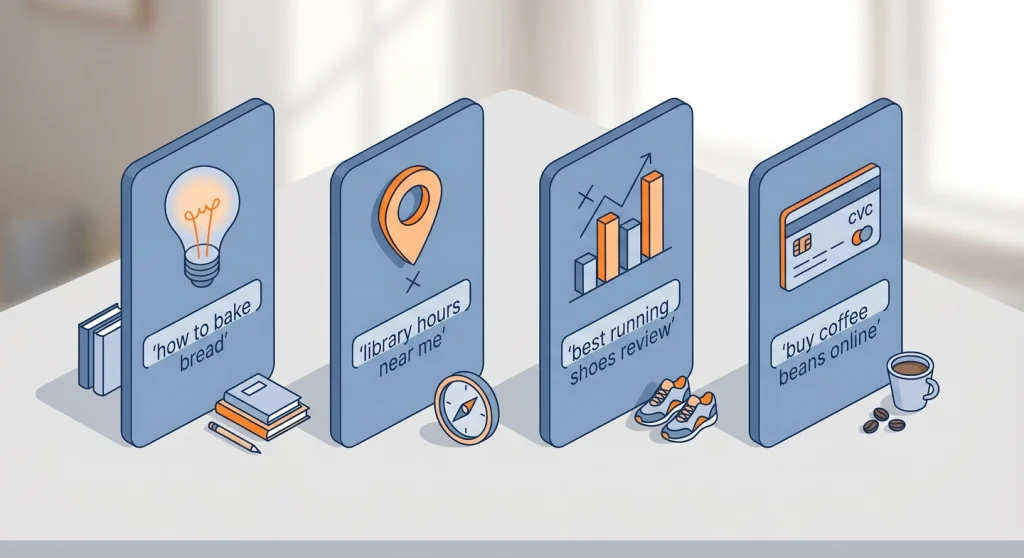
I used to pick a keyword, check its search volume, and start writing. That’s only half the job. The other half — the part I was skipping — is understanding why someone is typing that phrase into Google.
If someone searches “best blogging platforms 2026,” they want a comparison. Not a history lesson about blogging. Not a single product review. A comparison.
When your content doesn’t match what the reader actually wants, it doesn’t matter how well-written it is. They’ll hit the back button, and Google will notice. Before writing any article, search the keyword yourself, look at what’s ranking, and match that format and depth.

Relying Only on Google for Traffic
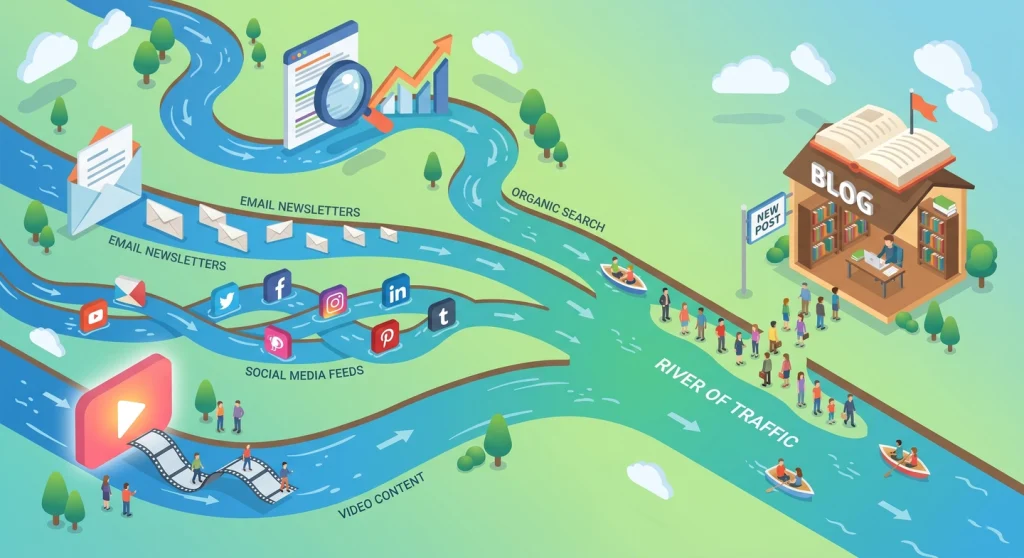
For years, Google was the only traffic source I thought about. Write, optimise, rank, get traffic. Simple.
But the game has changed. AI Overviews now answer many queries directly on the search results page. Zero-click searches have grown significantly — people get their answer without ever visiting your site. If Google is your only traffic channel, you’re standing on increasingly shaky ground.
I’ve started treating every article as a starting point for distribution, not the end. Share it on social media. Repurpose key points for a newsletter. Turn a section into a short video or a LinkedIn post. Build an email list so you own the relationship with your readers, not Google.
The bloggers who’ll thrive in the next few years are the ones who diversify how people find them.
Skipping E-E-A-T Signals on Your Blog

Google evaluates content based on Experience, Expertise, Authoritativeness, and Trustworthiness — what they call E-E-A-T. And it’s not just Google. AI search engines like Perplexity and ChatGPT Search also favour sources that look credible.
Yet I see blogs with no author bio. No about page. No indication of who wrote the content or why they’re qualified to write it. That’s leaving trust on the table.
Add a proper author bio with your credentials and experience. Create a detailed about page. Link to your social profiles. If you’ve been blogging for years, say so — that experience is an E-E-A-T signal in itself. These small additions tell both readers and search engines that a real person with real experience stands behind the content.

Comparing Yourself to Other Bloggers

Social media has made this worse than ever. You see someone celebrating 100,000 monthly visitors, or a blogger landing a brand deal, and suddenly your own progress feels pathetic.
I’ve been there. Comparison is a creativity killer. When you write to compete instead of writing to connect, readers feel the difference. Your voice changes. Your topic choices shift toward what’s trending rather than what you genuinely know.
Every blog has a different starting point, a different niche, a different audience. The only comparison that matters is your blog today versus your blog six months ago. If it’s better — better content, better traffic, better engagement — you’re winning. Ignore everyone else’s highlight reel.
How to Break These Habits
Breaking counterproductive habits doesn’t require a dramatic overhaul. Start with one. Pick the habit from this list that resonated most and focus on changing just that one thing for the next 30 days.
For me, the biggest shift came from habit #10 — going back to update old content. That single change improved my traffic more than any new article I wrote.
You don’t need to be perfect. You just need to stop doing the things that are quietly holding you back.
Frequently Asked Questions
What is the most common counter productive habit for bloggers?
The most common counter productive habit is obsessing over analytics instead of creating content. Bloggers check traffic stats multiple times a day, which creates anxiety and wastes time that could be spent writing, promoting, or updating existing posts.
How does AI-generated content hurt a blog?
AI-generated content hurts a blog when it replaces original writing entirely. Google’s helpful content system detects and demotes content that lacks originality, personal experience, and genuine expertise. AI works best as a research tool, not as a substitute for your own voice and perspective.
Why is relying only on Google traffic risky for bloggers?
Relying only on Google traffic is risky because zero-click searches and AI Overviews now answer many queries directly on the results page. Bloggers who depend solely on organic search lose traffic when algorithms change. Diversifying through email lists, social media, and content repurposing creates more stable, long-term growth.
What are E-E-A-T signals and why do they matter for blogs?
E-E-A-T stands for Experience, Expertise, Authoritativeness, and Trustworthiness. These are quality signals Google uses to evaluate content credibility. Blogs that include author bios, detailed about pages, and first-hand experience rank higher in both traditional search and AI-powered search engines like Perplexity and ChatGPT Search.
How can bloggers stop comparing themselves to others?
Bloggers can stop comparing themselves to others by measuring progress against their own past performance, not someone else’s highlight reel. Track your own metrics month over month — traffic, engagement, email subscribers — and focus on consistent improvement rather than matching another blogger’s results.