
Every blogger hits this wall. You sit down to write, stare at the screen, and are not sure what to blog about. I’ve been blogging for over fifteen years now, and I still get that blank-page feeling. The difference is, I’ve built systems to get past it — fast.

The real problem isn’t a lack of ideas. It’s not knowing which ideas are worth your time. A topic that excites you but nobody searches for, won’t bring traffic. A trending topic you know nothing about, won’t build trust.
I’m going to walk you through the methods I actually use to find blog topics — methods that work whether you’re running a personal blog, a niche site, or a business blog. These aren’t just tips for today. They’re frameworks you can keep coming back to for years.
What Does “What to Blog About” Really Mean?
What to blog about is the process of identifying topics for your blog that align with your expertise, interest your target audience, and have genuine search demand. It goes beyond picking a random subject — it means finding the intersection of what you know, what people need, and what you can rank for.
Getting this right is the single biggest lever for a blog’s success. Write about the wrong things and you’re shouting into the void.
Start With What You’ve Already Lived
I know this sounds obvious, but most bloggers skip right past it. Your personal experience is your unfair advantage. No AI tool, no competitor, no content farm can replicate what you’ve actually done.
Think about the problems you’ve solved recently. The tools you’ve tested. The mistakes you’ve made. When I migrated MetaBlogue to a new hosting setup, that single experience gave me three separate blog posts — the comparison research, the migration process, and the performance results after.
Google’s ranking systems explicitly reward first-hand experience. So does every AI search engine pulling answers for users. If you’ve done the thing, write about it.

Use AI Tools to Generate and Validate Ideas
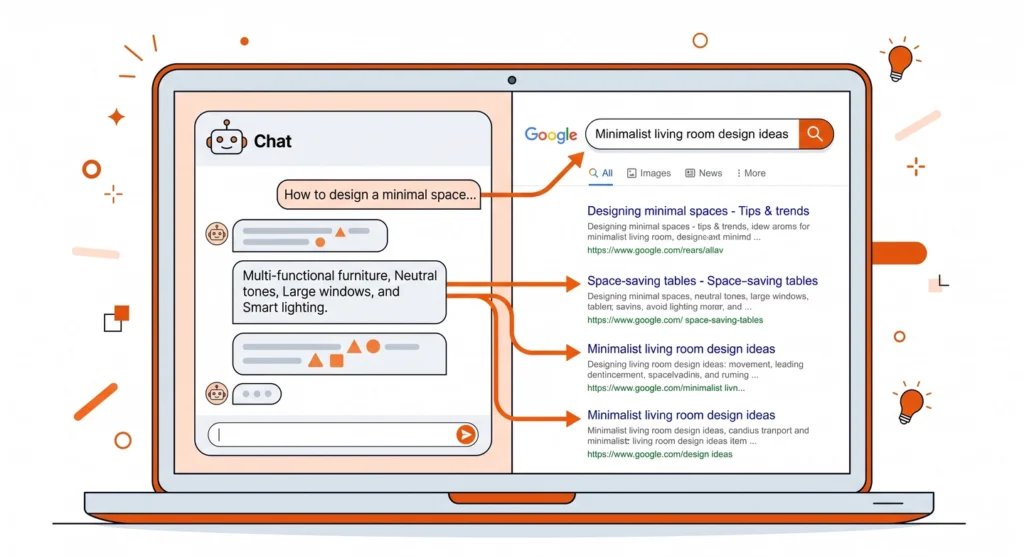
This is the biggest shift since I wrote about this topic back in 2020. AI tools didn’t exist for most bloggers then. Now they’re one of the fastest ways to break through a creative block.
Here’s how I use them. I open ChatGPT, Gemini, or Claude and type something like: “I run a blog about WordPress. Give me 20 blog post ideas that a small business owner would search for.” The list that comes back isn’t perfect, but it’s a starting point — and it takes thirty seconds.
But here’s the part most people miss. Don’t just take the AI’s suggestions and start writing. Validate the ideas first. Paste each potential topic into Google and see what comes up. Are the top results from massive sites you can’t compete with? Or is there a gap — thin content, outdated articles, missing perspectives?
I also use AI to expand on ideas I already have. “I want to write about caching plugins. What sub-topics should I cover that beginners would find useful?” That kind of prompt turns a vague idea into a structured outline.
Mine Your Own Analytics
If your blog has been running for any amount of time, your analytics hold a goldmine of topic ideas. I check two things regularly.
Top-performing posts. Look at which articles bring the most traffic. Can you write a follow-up? A deeper dive into one section? An updated version with fresh data? Readers already trust you on that topic — give them more.
Search queries in Google Search Console. This one is powerful. Go to Performance > Queries and look at the search terms people use to find your site. You’ll spot queries where you rank on page two or three — close enough to improve, and the topic is already validated by real search volume.
In my own Search Console, I once found that people were landing on a hosting review looking for “best hosting for GeneratePress.” I hadn’t written a dedicated post about that. So I did, and it outperformed the original review within two months.
Check What People Are Actually Asking
Real questions from real people are the best blog topics. Full stop. And there are several places to find them.
Reddit has become one of my go-to sources. Find subreddits in your niche, sort by top posts or search for common pain points. The questions people ask on Reddit tend to be raw and specific — exactly the kind of thing that makes a great blog post.
Quora still works for this, though I find it less useful than it was a few years ago. The quality of questions varies, but you can filter by topic and spot patterns quickly.
Google’s “People Also Ask” box is free research handed to you on a silver platter. Search your topic and look at the expandable questions. Each one represents a real query people are typing. I build entire FAQ sections from these.
Answer the Public and AlsoAsked visualise these question clusters in a way that makes content planning much easier. Plug in your keyword and you get a map of every angle people approach that topic from.

Do Keyword Research (But Don’t Obsess Over It)
Keyword research tools have changed a lot. You don’t need to spend hours manually comparing search volumes anymore. But you do need a basic sense of whether anyone is searching for what you want to write about.
I use a combination of Google Keyword Planner (free), Ubersuggest, and occasionally Ahrefs. The process is simple:
- Start with a broad topic you’re considering
- Look at the monthly search volume — anything above 500 is worth exploring
- Check the keyword difficulty — if you’re a smaller blog, look for terms under 40 difficulty
- Look at the related keywords and questions that come up
The trap I see bloggers fall into is chasing high-volume keywords they can never rank for. “Best laptop 2026” gets enormous traffic, but you’re competing with CNET, Wirecutter, and every tech publication on the planet. Find the long-tail variations where your expertise matters more than your domain authority.
Study Your Competitors (Strategically)
I’m not suggesting you copy anyone. But knowing what’s working for blogs in your space tells you where the demand is.
Pick three to five blogs in your niche. Look at their most-shared and most-linked content. Tools like Ahrefs, Semrush, or even a free option like Ubersuggest can show you which pages bring them the most organic traffic.
The goal isn’t to write the same article. It’s to find topics they’ve covered poorly — or haven’t covered at all. Every niche has gaps. Maybe a competitor wrote about a tool two years ago and the post is completely outdated. That’s your opportunity.
Expand and Update What You’ve Already Written
This is one of the most underrated strategies I know. Go back through your existing posts. Find the ones where you mentioned something briefly that deserves its own article.
I do this regularly. A passing mention of “image optimisation” in a speed test article became a full post on the best image compression plugins. A single paragraph about contact form spam turned into a complete guide to securing WordPress forms.
Updating old posts works just as well. Search engines love fresh content. If you have a post from two or three years ago that still gets some traffic, update it with current information, add new sections, and republish it with today’s date. I’ve seen traffic double on updated posts within weeks.

Think About What AI Search Engines Will Surface
Here’s something that wasn’t on anyone’s radar in 2020 but matters enormously now. AI-powered search — Google AI Overviews, Perplexity, ChatGPT search, Bing Copilot — doesn’t just list ten blue links. It pulls direct answers from content that’s clear, specific, and authoritative.
This changes how you should think about topic selection. Topics that let you give definitive, experience-backed answers perform better in AI search than vague, roundup-style posts.
Instead of “10 Random Blog Post Ideas,” think “How I Find Blog Topics Using Search Console Data.” The second one is specific, it’s grounded in experience, and it gives AI engines a concrete answer to surface.
When choosing what to blog about, ask yourself: “Could an AI engine quote a paragraph from this post as a direct answer to someone’s question?” If yes, you’ve picked a strong topic.
Build a Rolling Ideas List

One thing that changed my content workflow permanently — I keep a running list of blog ideas. Not in my head. In a notes app, a spreadsheet, or whatever tool stays open on your phone.
Every time I see an interesting question on Reddit, notice a gap in a search result, or think “someone should write about this” — I add it to the list. No filtering, no judging. Just capture the idea.
When it’s time to write, I never start from zero. I open the list, pick the idea that feels most ready, and start researching. Some ideas sit there for months before their moment comes. That’s fine. The point is, you’re never staring at a blank screen again.
Don’t Chase Trends You Can’t Sustain
I want to end with a caution. It’s tempting to jump on every trending topic, every viral moment, every algorithm shift. But if you write about something you don’t genuinely understand or care about, it shows. Readers notice. Search engines notice.
The blogs that last — the ones still getting traffic years later — are built on topics the writer knows deeply. Pick a lane. Go deep. Let the trending topics come to you when they intersect with your expertise, rather than chasing every shiny object.
Your next blog post doesn’t need to be revolutionary. It just needs to answer a real question, from a perspective only you can offer.
FAQ’s About What To Blog
How do I decide what to blog about as a beginner?
The best starting point for beginners is writing about what you already know and do. Pick a niche that combines your genuine interest with topics people are actively searching for. Use free tools like Google Keyword Planner or AnswerThePublic to confirm there’s actual demand before committing to a topic.
How often should I look for new blog topic ideas?
I set aside time every week — usually thirty minutes — to capture new ideas. I check Search Console data, scan Reddit, and note any questions I’ve encountered that week. Building a habit around idea collection means you always have a backlog when you’re ready to write.
Can AI tools replace my own topic research?
AI tools are excellent for brainstorming and expanding on ideas you already have. But they can’t replace your personal experience, your knowledge of your audience, or your ability to spot a genuine gap in the search results. Use AI as a starting point, not the final decision-maker.
What’s the biggest mistake bloggers make when choosing topics?
Writing about what they think sounds impressive instead of what their audience actually needs. I’ve done this myself — spending days on a post I was proud of that nobody searched for. Always validate your topic with some form of keyword or audience research before investing your time.
How do I find blog topics that will still be relevant in two to three years?
Evergreen topics that focus on fundamental problems tend to stay relevant. “How to speed up a WordPress site” will matter for years. “Best WordPress plugins for March 2026” won’t. Focus on the underlying need rather than the specific moment, and update your posts periodically to keep them current.



Good stuff Sanjeev. Big fan of writing from reading. I read offline, and online, and doing so increases my prolific nature. If you read a bunch you have inspiration to write a bunch. I guess my 126 eBooks can be proof of that 😉
Hi Ryan,
You have written so many eBooks which are itself the inspiration of reading for every blogger. I also use eBooks for most of my reading nowadays as it makes it so easy to be in touch with your reading materials.
– Sanjeev
Hi Sanjeev,
reaching a time where you can’t find a topic to write about is common among bloggers, Having a posting schedule will definitely help you get more time to research and write about new topics.
You have listed here many useful tips and tools. I agree with you about looking at your own posts and try to expand them, the tip about exit pages in google analytic is a very clever tip as it will help you to get a new blog idea and keep your readers longer on your blog.
Hi Qasim,
I always believe that no-one can write the perfect post. There are always options to improve upon it, so it’s always better to keep looking for those opportunities.
– Sanjeev