I switched MetaBlogue to GeneratePress back in 2019. Seven years later, I’m still running it — and I haven’t looked back once.
That says something. In over 15 years of blogging, I’ve tested more WordPress themes than I can count. Genesis Framework, Flavor, flavor-of-the-month page builder themes — I’ve tried them all. Most impressed me for a few months before the bloat caught up. GeneratePress never did.
The only one thing which I learned in these years, there is no theme which is best of everyone. It’s all about your personal skills and Theme combination which makes the beautiful looking sites.

But GeneratePress hasn’t stood still. New features, expanded pricing tiers, stronger block editor integration, and a growing ecosystem around GenerateBlocks have kept it evolving. So let’s look at where the theme stands today — performance, customization, pricing, and whether it still deserves the reputation it’s built.
Table of Contents
What Is GeneratePress?
GeneratePress is a lightweight WordPress theme built for speed and flexibility, weighing just 7.5KB with zero dependencies and only 2 HTTP requests on a clean install. Created by developer Tom Usborne, it uses a modular architecture that lets you activate only the features you need — keeping your site fast while giving you deep customization control.
Tom has been developing GeneratePress since 2014, and the theme now powers over 600,000 websites. It has crossed 7 million downloads and holds a perfect 5-star rating with over 1,000 reviews on WordPress.org.
Why I Originally Chose GeneratePress
I came from the Genesis Framework. It was solid, developer-friendly, and reliable. But it felt stuck in a different era of WordPress development. At that time they were in process of buy out so development had slowed down.
GeneratePress offered the same hooks-and-filters approach I loved about Genesis, but wrapped it in a modern, lightweight package. The WordPress Customizer integration meant I could see changes in real-time instead of editing PHP files and refreshing. That sold me.
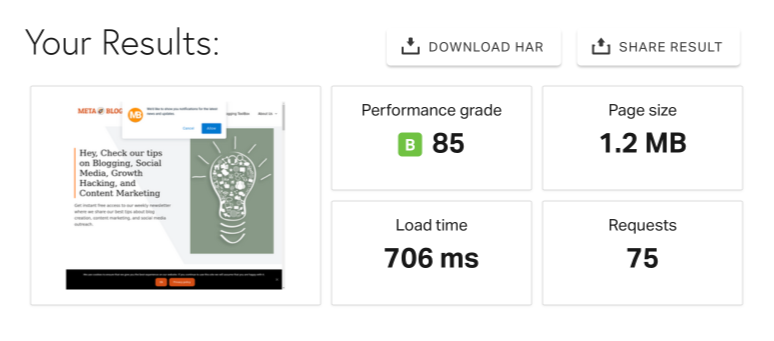
What sealed the deal was the performance. My site loaded in under one second after switching — with minimal HTTP requests and a main CSS file around 5.5KB compressed. I was running a CDN, sure, but the theme wasn’t fighting me on speed. It was helping.

GeneratePress Free vs Premium – What Do You Actually Get?
This is the first question everyone asks. The free version is genuinely useful — it’s not a crippled demo designed to force an upgrade.
| Feature | Free | Premium ($59/yr) |
|---|---|---|
| Core theme (7.5KB) | Yes | Yes |
| WordPress Customizer | Basic | 100+ options |
| Colors & Typography | Limited | Full control |
| Layout options | Basic | Advanced system with display rules |
| Theme Builder (Elements) | No | Yes — Hooks, Headers, Layouts, Blocks |
| Site Library | No | 60+ starter sites |
| Local Font Library | No | Yes (GDPR-compliant) |
| WooCommerce module | No | Yes |
| Mobile Header | No | Yes |
| Secondary Navigation | No | Yes |
| Off-Canvas Panel | No | Yes |
| Sticky Navigation | No | Yes |
| Infinite Scroll & Masonry | No | Yes |
| Support | Forum only | Priority email |
| Sites allowed | Unlimited | 500 |
If you’re building a simple blog or personal site, the free version should be good enough. But the moment you need custom headers, advanced typography, or WooCommerce support — you’ll want Premium.
I’ve been on Premium since day one. The Elements module alone is worth the price.
Key Features That Make GeneratePress Stand Out
Here are some of the key features of GeneratePress WordPress Theme which differentiate it from the other themes.
Modular Architecture
This is the design philosophy that separates GeneratePress from most themes. Nothing is forced on you. Each feature — typography, spacing, colors, WooCommerce, blog layouts — is a separate module you activate only when needed.
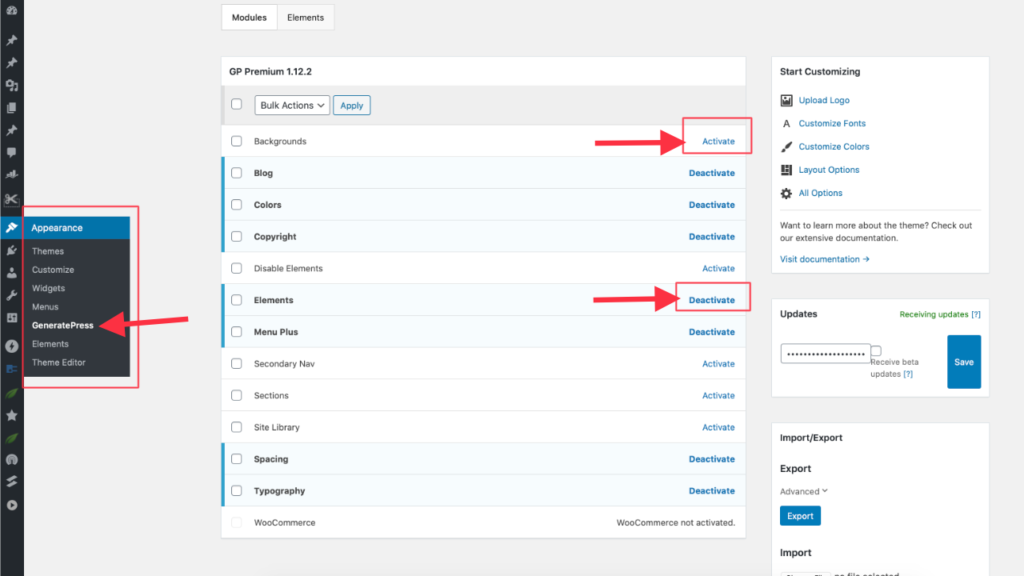
I have about eight modules active on MetaBlogue. Everything else stays off. The result? No wasted CSS, no unused JavaScript, no performance penalty for features I don’t use.
WordPress Customizer Integration
GeneratePress doesn’t reinvent the wheel with a custom settings panel. Everything lives inside the native WordPress Customizer, which means live preview for every change.

You get control over:
- Colors — global and per-element color settings
- Typography — font family, size, weight, line-height, letter-spacing for every element
- Spacing — padding and margins for containers, headers, content, sidebars, and footer
- Layout — content width, sidebar positioning, container types
- Background images — for body, header, and individual sections
For someone coming from a page builder theme, this might feel limited at first. But I’d argue it’s more efficient. You’re working within WordPress, not on top of it.
Elements Module (Theme Builder)
This is where GeneratePress gets powerful for developers and advanced users. The Elements module lets you create four types of custom elements:
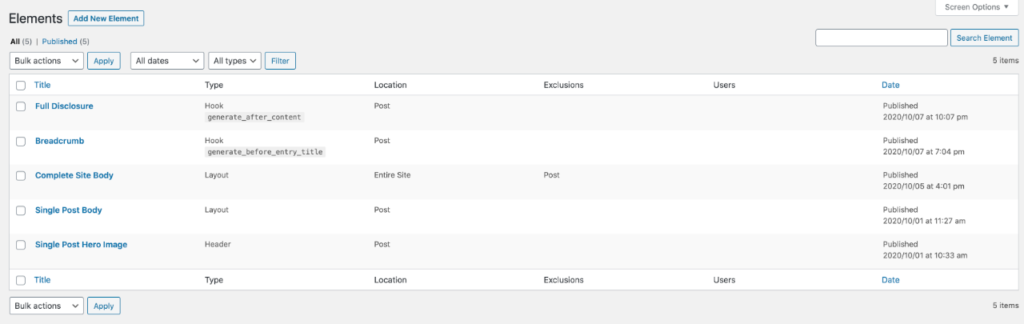
- Hooks — inject custom code (HTML, PHP, shortcodes) at any hook location in the theme. This is the Genesis-style flexibility I missed.
- Headers — build completely custom headers using the block editor
- Layouts — override sidebar positions, content width, and page structure on a per-page or per-category basis
- Blocks — add dynamic block-based content anywhere in your theme
Each element comes with display rules, so you can show a custom header only on your blog archive, or add a hook only on single posts. This granular control is what makes GeneratePress feel like a framework, not just a theme.
Local Font Library
GeneratePress lets you upload custom fonts or install Google Fonts locally. This matters for two reasons — GDPR compliance (no external requests to Google) and performance (fonts are served from your own server).
The font optimization reduces file sizes by up to 50% compared to loading fonts the traditional way.
Starter Sites Library
The starter site library used to be one of GeneratePress’s weaker areas — just a handful of basic templates. That’s changed significantly. GP Premium now includes 60+ starter sites, and the GeneratePress One bundle offers 80+ along with 200+ design patterns. These import with one click and give you a fully designed starting point.
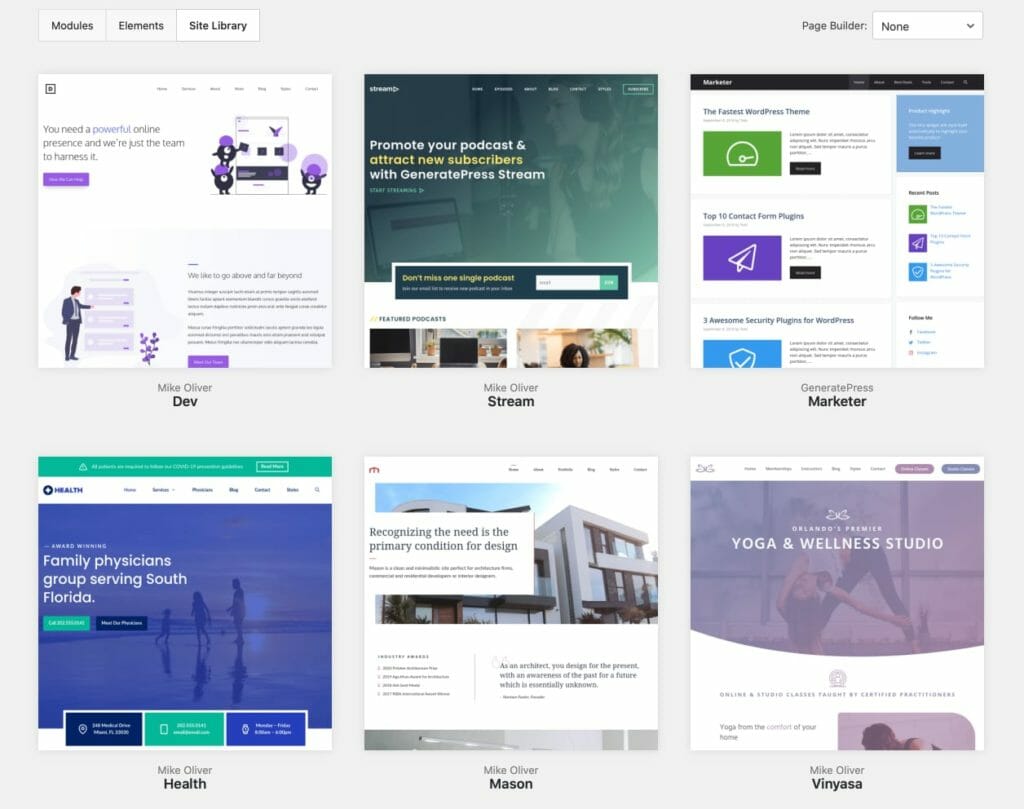
Are they as flashy as Elementor templates? No. But they’re clean, fast, and built the right way — with native WordPress blocks and GenerateBlocks, not page builder shortcodes that break when you switch themes.

GenerateBlocks – The Missing Piece
GeneratePress and GenerateBlocks are built by the same developer, and they’re designed to work together. While GeneratePress handles your theme structure, GenerateBlocks gives you the block editor components for content layout.
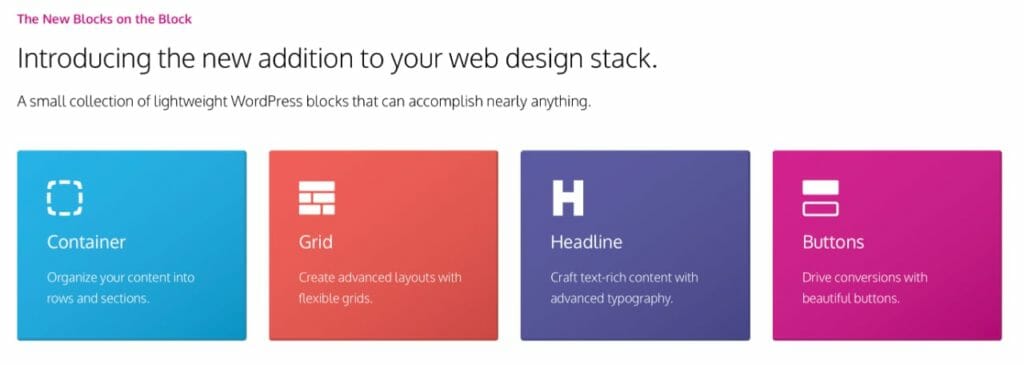
The core blocks are straightforward:
- Container — flexible wrapper for layout sections
- Grid — responsive column layouts
- Headline — typography-rich heading blocks
- Buttons — styled call-to-action buttons
- Query Loop — dynamic post listings
- Image — enhanced image blocks
GenerateBlocks Pro ($99/year) adds 300+ design patterns and drag-and-drop page building capabilities. But even the free version is enough for most content layouts.
I use GenerateBlocks on MetaBlogue for structured content sections and comparison tables. It’s lightweight, doesn’t add bloat, and plays perfectly with the theme.
Performance – Real Numbers, Not Just Claims
Every theme claims to be fast. Here’s what I actually see.
On a clean GeneratePress install with no plugins, you get a 7.5KB page with 2 HTTP requests. That’s essentially a blank canvas that scores 100 on every speed testing tool.
But nobody runs a blank site. What matters is real-world performance with content, plugins, and images. On MetaBlogue — running GeneratePress Premium with a caching plugin, CDN, and a standard set of plugins — my pages consistently load in under one second. A big part of that is optimizing images properly for GeneratePress, which I’ve covered separately if you want the full breakdown.
The reason is simple. GeneratePress doesn’t generate CSS or JavaScript for features you haven’t activated. Most themes load everything regardless. GeneratePress loads only what you use.
Compare that to popular alternatives:
| Theme | Clean Install Size | HTTP Requests | jQuery Dependency |
|---|---|---|---|
| GeneratePress | ~7.5KB | 2 | No |
| Astra | ~40KB | 4-6 | Optional |
| Flavor | ~50KB | 5-7 | Yes |
| OceanWP | ~80KB | 8-10 | Yes |
| Divi | ~300KB+ | 15+ | Yes |
These numbers shift once you add page builders and plugins, but the baseline matters. A lean foundation means fewer things fighting for resources and faster site load for better SEO results.
GeneratePress vs Astra – The Real Comparison
Astra is the most common alternative people consider. Both are lightweight, both offer free and premium versions. Here’s how they differ in practice.
Astra leans toward a no-code, visual-builder experience. It integrates deeply with Elementor and has more pre-built templates. If you want drag-and-drop everything, Astra is easier out of the box.
GeneratePress leans toward code-quality and performance purity. It’s leaner, gives you hooks and filters for developer-level control, and stays closer to native WordPress. If you care about clean code and long-term performance, GeneratePress wins.
I chose GeneratePress because I want control over my code, not a visual interface abstracting it away. But I understand why someone with no coding experience might prefer Astra. Both are solid choices. I’ve written a detailed comparison of GeneratePress, Astra, and OceanWP if you want a deeper side-by-side breakdown.
GeneratePress Pricing in 2026
GeneratePress has expanded its product lineup into a tiered ecosystem. Here’s how the pricing looks today:
| Plan | Price | What’s Included |
|---|---|---|
| GP Premium | $59/year | Theme + 14 modules, 60+ starter sites, 500 sites |
| GenerateBlocks Pro | $99/year | 300+ patterns, 20+ starter sites, 500 sites |
| GenerateCloud | $99/year | Custom pattern libraries, requires GB Pro |
| GeneratePress One (Bundle) | $149/year | Everything above + future products, 80+ starters, 200+ patterns |
All plans include a 30-day money-back guarantee and can be cancelled anytime. Licenses cover up to 500 sites, including client projects.
A couple of things worth noting. The old lifetime license option isn’t prominently offered anymore — the focus has shifted to annual subscriptions. The renewal discount for new customers has also been eliminated, though existing subscribers keep their original pricing.
At $59/year, GP Premium is still one of the best values in WordPress themes. That’s less than $5/month for a theme you can use on 500 sites.
WooCommerce Integration
If you’re running an online store, GeneratePress has a dedicated WooCommerce module. It gives you layout control for product pages, archive pages, cart, and checkout — all through the Customizer.
I don’t run WooCommerce on MetaBlogue, so I can’t give you first-hand performance data here. But the module follows the same philosophy as the rest of the theme — lightweight, no unnecessary styling, and you control what gets loaded. If you’re specifically evaluating themes for an online store, I’ve also reviewed Astra as a WooCommerce theme — it’s worth comparing both before you decide.
For a serious WooCommerce store, you’ll want GP Premium for the layout flexibility and GenerateBlocks for custom product page sections.
Do You Still Need a Page Builder with GeneratePress in 2026?
This is a question I get asked a lot. Short answer — probably not.
Between GeneratePress Elements and GenerateBlocks, you can build virtually any layout without Elementor, Beaver Builder, or any third-party page builder. The WordPress block editor has matured enormously, and GeneratePress has evolved right alongside it.
I removed Elementor from MetaBlogue two years ago. I haven’t missed it. The combination of native blocks and GenerateBlocks handles everything I need — content layouts, comparison tables, call-to-action sections, and custom post templates.
That said, if you have an existing site heavily built with Elementor or Beaver Builder, GeneratePress works fine alongside them. The theme doesn’t conflict with page builders. You just won’t need one for most tasks anymore.
Support and Community
Tom Usborne (the developer) is actively involved in support. The GeneratePress support forum is public and indexed by Google, which means you can often find answers just by searching.
Premium users get priority email support. In my experience, response times are quick and the answers are genuinely helpful — not canned responses pointing you to documentation.
The community around GeneratePress is also solid. There are active Facebook groups, YouTube tutorials, and a growing library of third-party resources. For a theme maintained primarily by one developer, the ecosystem is impressive.
Who Should Use GeneratePress (And Who Should Skip It)
Here are the reasons why you would want to purchase GeneratePress while few reasons why you should avoid purchasing it.
GeneratePress is ideal if you
- Care about site speed and clean code
- Want a theme that works with WordPress, not against it
- Are comfortable with the WordPress Customizer for design
- Need developer-level control through hooks and filters
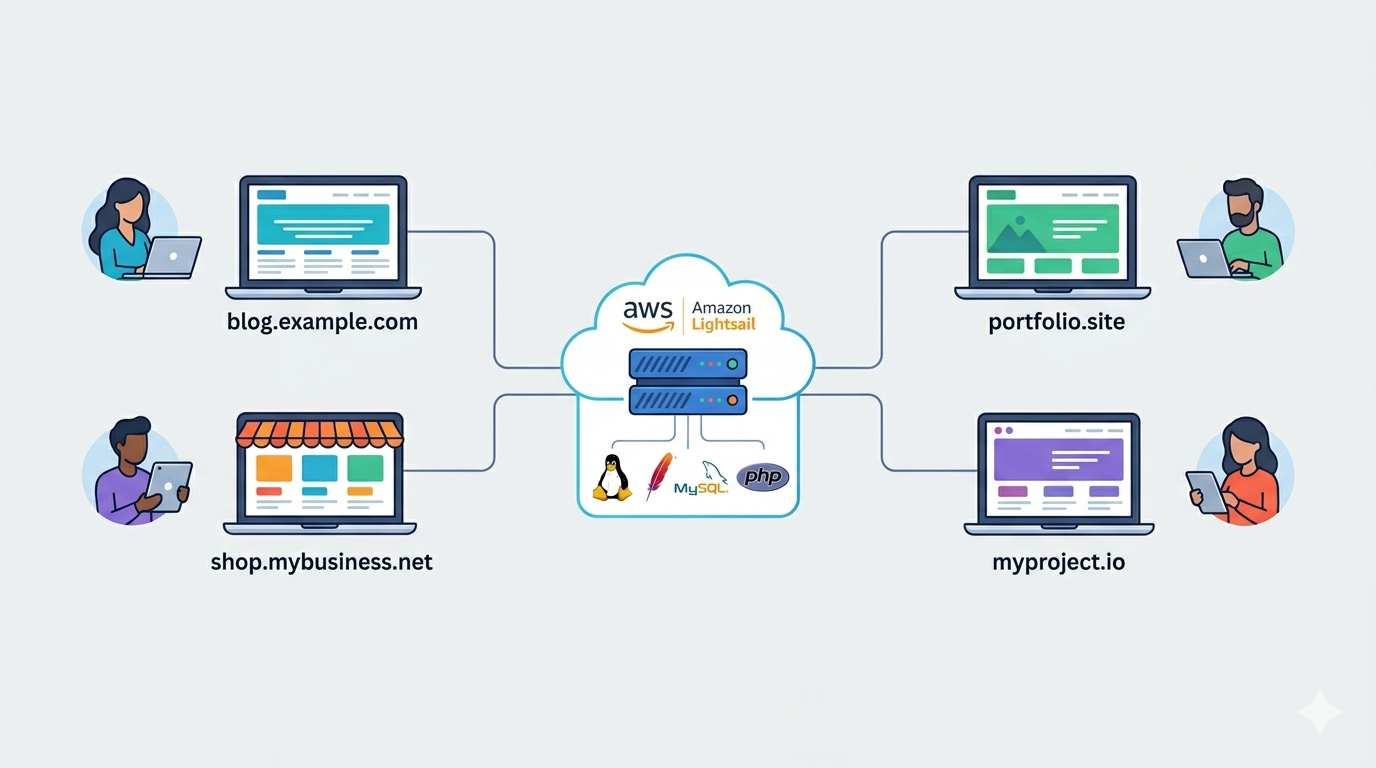
- Run multiple sites (the 500-site license is generous)
- Want to avoid page builder dependency
You might want to look somewhere if you
- Need dozens of flashy pre-built templates to choose from
- Prefer a fully visual, drag-and-drop design experience
- Have zero interest in learning any customization
- Want everything included in one product (GenerateBlocks Pro is a separate purchase)
The basic installation of GeneratePress looks plain. You need to bring your own design eye — or pick a starter site and customize from there. If you want a theme that looks stunning out of the box with zero effort, GeneratePress isn’t that theme. It’s a framework that rewards the effort you put into it.
Pros and Cons
Here is a list of things which I like and what I think can be improved for GeneratePress.
What We Liked
- Exceptionally lightweight — 7.5KB, 2 HTTP requests
- Modular architecture keeps unused features from loading
- Deep customization through hooks, filters, and Elements
- Excellent WordPress Customizer integration
- 500-site license at $59/year is outstanding value
- Active development and responsive support
- Works beautifully with GenerateBlocks for block-based design
What Could Be Better
- Plain out of the box — requires design effort
- GenerateBlocks Pro is an additional cost for advanced layouts
- No lifetime license prominently available anymore
- Starter site library is smaller than competitors like Astra
- Learning curve for the Elements module and hooks system
My Verdict After 7+ Years

GeneratePress has grown from a niche lightweight theme into a mature ecosystem — GP Premium, GenerateBlocks, GenerateCloud, and the One bundle. The developer hasn’t chased trends or bolted on bloat. Instead, each addition follows the same principle: modular, performant, and built on native WordPress standards.
That consistency is rare. Most themes either stagnate or balloon into everything-and-the-kitchen-sink products. GeneratePress has done neither. It’s still the leanest, cleanest WordPress theme I’ve used. It stays out of your way, performs brilliantly, and gives you control where it matters.
If you’re starting a new WordPress site today and performance matters to you, GeneratePress is the theme I’d recommend. My site still loads in under a second after seven years on this theme. That’s not marketing. That’s my actual experience.
Frequently Asked Questions
Is GeneratePress free version good enough for a blog?
GeneratePress free is good enough for a simple blog or personal site. You get the core lightweight theme, basic Customizer options, and clean responsive design. I’d recommend upgrading to Premium once you need custom typography, advanced layouts, or the Elements module — but you can start free and upgrade later without rebuilding anything.
How does GeneratePress compare to Astra in 2026?
GeneratePress and Astra are both lightweight WordPress themes, but they target different users. Astra focuses on visual building with deeper Elementor integration and more starter templates. GeneratePress focuses on performance purity and developer-level control through hooks and filters. I chose GeneratePress because I wanted cleaner code and more granular control over my theme output.
Does GeneratePress work with the WordPress block editor?
GeneratePress works excellently with the WordPress block editor. The theme is built to complement native blocks, and when you add GenerateBlocks (from the same developer), you get a complete layout building system. I build all my content layouts using blocks now — no page builder needed.
Is GeneratePress worth $59 per year?
GeneratePress Premium at $59/year covers up to 500 websites. That’s less than $5/month for a theme with 14 premium modules, 60+ starter sites, and priority support. I’ve been paying for it since 2019, and the performance gains alone have been worth the cost. The 30-day money-back guarantee means you can try it risk-free.
Can I use GeneratePress for WooCommerce?
GeneratePress includes a dedicated WooCommerce module in the Premium version. It provides layout control for product pages, archives, cart, and checkout. Combined with GenerateBlocks, you can customize product page layouts without a separate WooCommerce-specific theme. The lightweight codebase also helps store pages load faster.

GeneratePress WordPress Theme
Performance Oriented WordPress Theme
Pros
- Lightweight WordPress Theme
- WordPress Customizer Integrations
- Fast Loading Speed
- Amazing Customer Support
Cons
- Not enough Pre-defined layouts available
- Needs some design experience
The Verdict
GeneratePress Theme is one of the light and reliable WordPress Theme which is available in free and premium version. The extensive customization options with very affordable pricing makes it one of the good tools in your toolbox.