I’ve spent years watching SEO advice go through wave after wave of reinvention. Earlier the debates used to be about backlinks, keyword density, and whether social media helped your rankings. The landscape looked completely different at that time.
Now there’s an entirely new set of SEO myths taking root — this time around AI search, generative engine optimization, and whether SEO even matters anymore. The old myths haven’t gone away either. They’ve just put on new clothes.
So here are 10 SEO myths — a mix of stubborn classics and shiny new AI-era misconceptions — that I still see bloggers and website owners falling for.
What Are SEO Myths?
SEO myths are widely repeated beliefs about how search engines rank content that are either outdated, oversimplified, or completely wrong. They spread through blog posts, YouTube videos, and social media, and often lead website owners to waste time on tactics that don’t move the needle.
These myths persist because search algorithms change faster than the advice circulating about them. What worked five years ago might be irrelevant today — and what sounds logical doesn’t always match how Google actually works.
If you believe in any of these myths, you’re not only wasting your time but you could also do some serious damage to your website.
Myth 1: SEO Is Dead Because of AI
This might be the loudest SEO myths in the circles right now. Every few months, someone publishes a post declaring that ChatGPT, Perplexity, or Google’s AI Overviews have finally killed SEO.
They haven’t. Not even close.
Google still processes billions of queries every single day. Organic search still drives the majority of measurable traffic for most websites. What’s changed is the surface area — there are now more places your content can appear, not fewer.
I’ve been blogging for over a decade, and I’ve heard “SEO is dead” at least four times. After Panda, after Penguin, after mobile-first indexing, and now after AI. Every time, the bloggers who adapted came out ahead. The ones who panicked and abandoned SEO fell behind.
SEO isn’t dead. It’s expanding.
Myth 2: GEO Replaces Traditional SEO

Generative Engine Optimization — the practice of optimizing your content to be cited by AI tools like ChatGPT, Perplexity, and Google AI Overviews — is real. But the idea that it replaces traditional SEO is completely wrong.
Here’s what the data actually shows: a Brainlabs study found that 96% of links appearing in Google’s AI Overviews came from websites already ranking in the top 10 organic results. In other words, if your traditional SEO isn’t solid, your GEO efforts have almost nothing to build on.
I think of GEO as a layer on top of SEO, not a replacement. You still need clean site structure, quality backlinks, and well-written content. GEO just adds new signals — clarity, structured data, and declarative statements that AI systems can easily extract and cite.
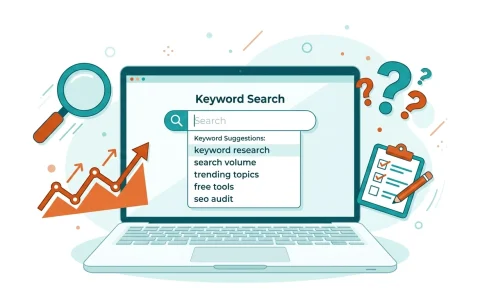
Myth 3: You Need to Reformat Your Content for AI Search
This one spread fast as AI search tools took off. The advice went something like: rewrite your headings as questions, break content into FAQ-style chunks, and shorten paragraphs so LLMs can “read” them better.
Google addressed this directly in their official guide for AI search. Their position is clear — artificially restructuring content for AI consumption is unnecessary. The fundamentals haven’t changed: write valuable, unique content that serves the reader.
That said, I do find that well-structured content with clear headings performs better everywhere — in traditional search, in AI Overviews, and for readers scanning on mobile. But that’s always been good practice. You don’t need a special “AI-friendly” format.
Myth 4: AI-Generated Content Is Automatically GEO-Ready

I see this one constantly. Bloggers fire up ChatGPT, generate a dozen articles, and assume they’re optimized for AI search because AI wrote them.
That’s not how it works. GEO isn’t about who produces the content — it’s about how authoritative, specific, and trustworthy the content is. AI tools citing sources look for clear declarative statements, supporting data, and signals of real expertise. A generic AI-generated article with no original perspective, no data, and no experience signals gives these systems nothing worth citing.
Google’s spam policies don’t penalize AI content for being AI-generated. They penalize content that lacks value regardless of how it was created. I’ve used AI as a writing assistant for research and drafts, but the final article always carries my experience, my opinions, and specific details from actually doing the thing I’m writing about.
Myth 5: Keyword Stuffing Still Works
I keep coming back to this myth because people are still doing it. Year after year. With straight faces.
Google’s algorithms have understood semantic meaning for years now. They don’t need you to repeat “best WordPress hosting” fourteen times in an 800-word article. They understand synonyms, related concepts, and user intent behind queries.
Natural keyword placement at 1–2% density is the sweet spot. If you read your article out loud and a phrase sounds forced or repetitive, rewrite it. Your reader will notice before Google does.

Myth 6: More Backlinks Always Mean Better Rankings
The old thinking was simple — more links pointing to your site, the higher you rank. Some bloggers still chase link volume through directory submissions, blog comment spam, and link exchange schemes.
Google’s spam updates have cracked down hard on manipulative link building. Thousands of low-quality backlinks from irrelevant sites won’t boost your rankings. They’ll damage them.
What works is earning backlinks from relevant, authoritative sources in your niche. One genuine editorial link from a respected site in your industry is worth more than five hundred directory listings. I learned this the hard way years ago when I cleaned up MetaBlogue’s backlink profile and saw rankings actually improve after removing links.
Myth 7: Publishing More Content Improves Rankings
I used to believe this one myself. Early on, I thought publishing five posts a week would grow traffic faster than publishing two high-quality posts a month.
It doesn’t. Search engines reward content that genuinely answers the searcher’s question. A single, well-researched evergreen article that covers a topic thoroughly will outperform ten shallow posts on related subtopics.
These days, I publish less frequently on MetaBlogue but spend more time on each article — researching, adding personal experience, and making sure the article is the most useful resource on that topic. The traffic results have been better than my high-volume days.
Myth 8: SEO Is a One-Time Setup
I still meet bloggers who think SEO is something you configure once and forget. Install a plugin, fill in some meta descriptions, and you’re done forever.
That’s never been true, and it’s even less true now. Google updates its algorithm multiple times a year. Your competitors publish new content. User search behavior shifts — people are now asking longer, more conversational questions because they’re used to talking to AI assistants.
I revisit my older articles regularly. I update statistics, add sections that cover new developments, and refresh the content to match how people actually search today. An article that ranks well now can quietly slip if you leave it untouched for a couple of years.

Myth 9: E-E-A-T Is a Direct Ranking Factor
This misconception is everywhere. Bloggers treat Experience, Expertise, Authoritativeness, and Trustworthiness as a checklist of ranking signals that Google’s algorithm scores directly.
Google’s own documentation says otherwise. E-E-A-T is a framework that Google’s human quality raters use to evaluate search results — it guides how Google thinks about quality, but it’s not a direct algorithmic input with a score attached to your pages.
That doesn’t mean you should ignore it. The signals that demonstrate E-E-A-T — author bylines, first-hand experience, citations from authoritative sources, transparent credentials — absolutely help your content perform well. But chasing E-E-A-T as a technical checkbox misses the point. Write from genuine experience, be transparent about what you know, and the quality signals follow naturally.
Myth 10: AI Search Traffic Doesn’t Matter Yet
Many bloggers dismiss AI-sourced traffic as too small to bother with. On the surface, the analytics seem to support this — direct traffic from ChatGPT or Perplexity often shows up as under 1% in most dashboards.
But that number is misleading. AI search influences how people discover and trust your brand in ways that don’t show up in a simple referral report. One study found that a site showing under 1% direct ChatGPT traffic actually traced 15% of its conversions back to AI-assisted discovery.
I’ve started paying closer attention to how MetaBlogue content appears in AI tools. When Perplexity or Google AI Overviews cite your article, it builds credibility even if the reader doesn’t click through immediately. Visibility in AI search is brand building — and it’s happening right now, not in some distant future.
What Actually Works

If you strip away the myths, what’s left is surprisingly straightforward:
- Write from real experience. First-hand knowledge is the one thing AI tools can’t fake and search engines increasingly reward.
- Make your content clear and specific. Declarative, factual statements get cited. Vague, hedging language gets skipped.
- Build authority the honest way. Earn backlinks through useful content. Maintain an author profile with real credentials.
- Keep your content fresh. Update older articles. Add new data. Show that your content reflects the current state of things.
- Don’t chase tactics — serve the reader. This has been true since Google’s first algorithm update, and it’s still true now that AI is in the mix.
The bloggers who do well are the same ones who’ve always done well — the ones who focus on being genuinely useful instead of gaming systems.
Frequently Asked Questions
Is SEO still relevant?
SEO remains highly relevant. Google processes billions of searches daily, and organic search drives the majority of website traffic. AI tools like ChatGPT and Perplexity have expanded where content can appear, but they haven’t replaced traditional search. The fundamentals — quality content, good site structure, and earned authority — still determine visibility.
What is GEO and how is it different from SEO?
Generative Engine Optimization is the practice of optimizing content so AI tools cite it in their generated answers. GEO builds on traditional SEO but focuses on clarity, structured data, and authoritative statements that AI systems can extract. Think of it as a layer on top of SEO — without solid search fundamentals, GEO efforts have very little to work with.
Does AI-generated content hurt SEO rankings?
AI-generated content doesn’t automatically hurt or help rankings. Google evaluates content quality regardless of how it was produced. The problem isn’t the tool — it’s the output. Generic, thin AI content with no unique perspective or expertise signals will underperform, just like thin human-written content always has.
Do I need to rewrite my content for AI search?
No. Google’s official guidance confirms that artificially reformatting content for AI consumption is unnecessary. Well-structured content with clear headings, specific claims, and genuine expertise performs well across both traditional and AI search surfaces. Good writing for humans is good writing for AI.
How many backlinks do I need to rank on Google?
There is no magic number. Backlink quality matters far more than quantity. A handful of editorial links from authoritative, relevant sites in your niche will do more for your rankings than thousands of low-quality directory or comment links. Focus on creating content worth linking to rather than chasing a specific count.