Every few weeks, someone asks me a version of the same question: should I start selling on Amazon, or should I build my own online store first?
I understand why the question feels heavy. Pick the marketplace, and you hear horror stories about fees and account suspensions. Pick your own store, and you hear about beautiful websites that nobody ever visits. Both warnings are true, which doesn’t make the decision any easier.
I sell on Amazon India, and I also build and run WooCommerce stores on WordPress. So I have lived both sides of this debate, including the unglamorous parts like processing returns and filing reimbursement claims. In this article, I’ll give you an honest comparison and — more importantly — a way to decide that depends on one question most articles never ask.
What Is the Difference Between a Marketplace and Your Own Online Store?
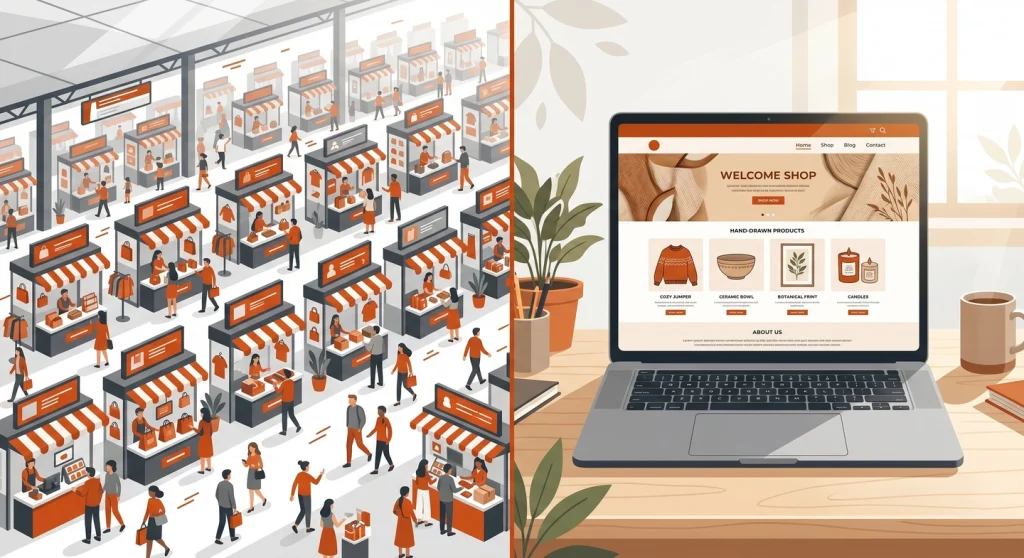
An online marketplace is a platform like Amazon, Flipkart, or Etsy where you list products alongside thousands of other sellers, and the platform owns the customer relationship. Your own online store is a website you control — typically built on WooCommerce or Shopify — where you keep the customer data, the branding, and most of the margin.
That last phrase — who owns the customer — is the real difference. Everything else, from fees to traffic, flows out of it.
What Selling on a Marketplace Actually Looks Like
The biggest thing a marketplace gives you is buyers who are already there. When I list a product on Amazon India, it can start getting impressions the same day, with zero marketing spend from my side. No new website earns that kind of attention in its first month. Buyers also trust the platform, so a new seller borrows credibility they haven’t built yet.
Now for the part the brochures skip.
Marketplace referral fees typically take anywhere from 5% to 20% of each sale depending on the category you linked your product, before you add closing fees, shipping, and fulfillment costs. These charges apply on every single order, regardless of whether the marketplace actually brought you that buyer. I’d recommend checking the official Amazon India fee schedule against your numbers before you list anything.
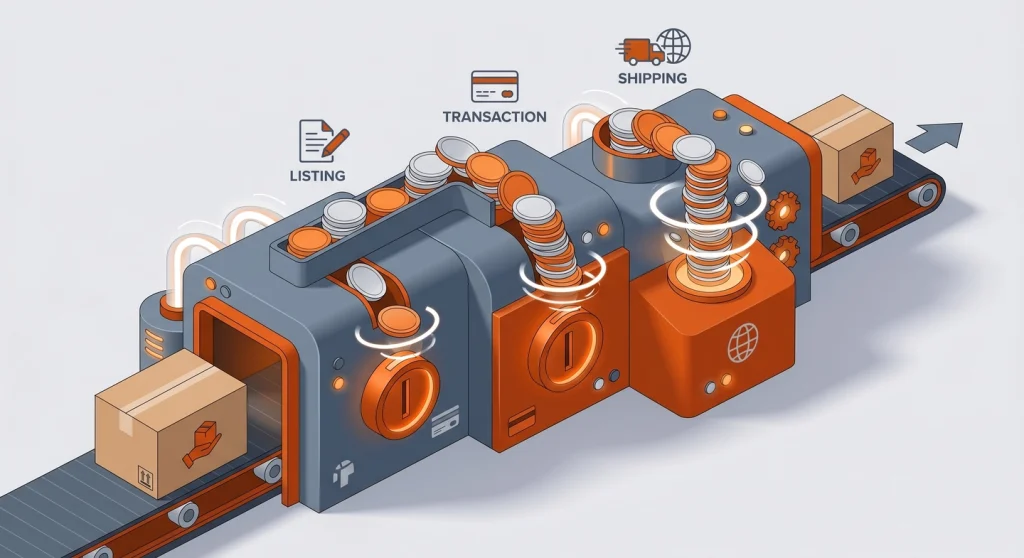
But the referral fee is only the visible part of the bill. Here’s something I learned from actually selling: simply listing a product on Amazon brings you a few random sales at best. To make a listing properly work, you need to switch on Amazon Ads — and from that point onwards, your ad optimization skill decides your profit more than your product does. The sellers who win on marketplaces aren’t the ones with the best products. They’re the ones who run ads at the best ROI.
The true cost of selling on a marketplace — referral fees, return charges, RTO (Return to Origin, where an undelivered order travels back to you at your cost), and advertising — takes away around 35–40% of the selling price. That is my real number from selling on Amazon India, not a brochure figure. Which means the most important decision you make is not the listing or the photos — it’s the price. If your price doesn’t carry a 40% cushion above your landed cost, the marketplace will happily sell your product for you and keep all the profit.
Then there’s the operational side. Returns arrive whether they’re fair or not, and when a returned product comes back damaged or different, you are the one filing a Safe-T claim and waiting on a decision. I’ve been through that cycle, and it teaches you something important: on a marketplace, you operate inside someone else’s rules, and those rules are written to protect the buyer first.
When you sell on a marketplace, the customer belongs to the platform, not to you. You don’t get their email address, you can’t retarget them, and you can’t invite them back for your next product launch. This means every sale is a one-time transaction unless the platform decides to show you to that buyer again.

What Running Your Own Online Store Actually Looks Like
Your own store flips every one of those points.
I build my stores on WordPress with WooCommerce and the GeneratePress theme, and the difference in control is night and day. I decide how the product page looks, what the checkout flow feels like, and which payment options to offer. There’s no competitor’s listing sitting one click away from my buy button.
The margin math changes too. On your own store you pay hosting and payment gateway charges, but there’s no referral fee taken off the top of every order. The customer’s email lands in your list, which means the second sale costs you almost nothing to make.
But here’s the warning I’d give you as a friend: your own store starts with zero visitors. Nobody is searching inside your website the way they search inside Amazon. Every visitor has to come from somewhere — your blog, SEO, social media, or paid ads — and building that traffic takes months, not weeks. Though, be prepared for the technical side as well: updates, backups, speed, and security are all your responsibility now.
Marketplace vs Own Online Store: Side-by-Side Comparison
| Factor | Marketplace | Your Own Store |
|---|---|---|
| Traffic | Built-in from day one | You bring every visitor |
| True cost per sale | 35–40% (fees + returns + RTO + ads) | Gateway charges + your ad spend |
| Ad spend | Needed to scale; converts cheaper | Needed to scale; costlier conversions |
| Customer data | Platform keeps it | You keep it |
| Branding | Limited to a listing page | Fully yours |
| Trust | Borrowed from the platform | Earned over time |
| Rules & risk | Policy changes, suspensions | You set the rules |
| Setup effort | List and go | Build, host, maintain |
The Question That Decides It: Do You Already Have an Audience?
Here’s what most comparison miss completely. They assume you’re starting from zero. But if you’re a creator — a blogger, a YouTuber, someone with an email list — you are not starting from zero, and that changes the answer.
The marketplace’s single biggest advantage is traffic. If you already have an audience that reads your posts or watches your videos, you already own the thing the marketplace charges you so heavily to provide. Sending your existing readers to your own WooCommerce store costs you nothing and earns you everything: the full margin, the customer relationship, and the repeat sale.
But what if you have a product idea and no audience yet? Then the marketplace is honestly the better classroom. It tells you within weeks whether real strangers will pay for your product, without you spending six months building a website first.
Now, one honest caveat — because “who brings the traffic” is not a free lunch on either side. The moment you want to scale beyond your existing audience, you’ll be paying for ads on both platforms. The real difference is what a customer costs you.
A shopper who clicks your Amazon ad is already inside a store, wallet ready, searching for exactly what you sell. A Meta ad has to interrupt someone scrolling and create the desire from scratch. In my experience, converting a customer through marketplace ads is meaningfully cheaper than converting a cold audience through Meta ads, because the purchase intent is already there. It’s the same search intent principle that decides which blog posts rank — buyers who are already searching are always easier to convert than people you have to interrupt.
So the question to ask yourself isn’t “which platform is better?” It’s “who is bringing the traffic — me or them — and what does each paid customer cost?”

Digital or Physical? It Changes the Answer Too
The type of product shifts the maths as well.
Physical products lean towards marketplaces first. Logistics, COD handling, and buyer trust matter enormously for physical goods in India, and marketplaces have spent years solving exactly those problems.
Digital products lean the other way. Ebooks, templates, courses, and software have no shipping, no returns logistics, and near-100% margins — which makes marketplace fees feel much more painful. If you’re selling digital products to an audience you already have, your own store should almost always come first.
My Recommendation: Treat It as a Sequence, Not a Choice

After selling on Amazon and building my own online stores, here’s the honest answer: this was never an either/or question. It’s a question of order.
If you have no audience yet: start on a marketplace. Let it validate your product and fund your learning. Price for the full cost stack from day one — that 35–40% has to be in your price before you list, not discovered after. And from your very first sale, start building the asset the marketplace will never give you: begin a simple blog or email list, and put your own store on the roadmap for month six, not year three.
If you already have an audience: start with your own store. WooCommerce on a fast theme is enough — you don’t need anything fancy on day one. If you are someone who doesn’t like handling technical stuff, Shopify is also a good alternative to have own online store. Add the marketplace later as a discovery channel, the way a shop in a busy mall brings in walk-in customers who’ve never heard of you.
Either way, the destination is the same. The marketplace finds you strangers; your own store turns them into customers you keep. Sellers who understand that sequence stop paying referral fees on relationships they could own.
One more thing worth watching: product discovery itself is changing. AI shopping assistants are starting to influence what buyers see, both inside marketplaces and in regular search. I’ll be covering what that means for sellers in upcoming articles, so this is a space worth keeping an eye on.
Frequently Asked Questions
Is it cheaper to sell on my own website than on a marketplace?
Selling on your own website is cheaper per sale, since you avoid referral and closing fees and pay only hosting and payment gateway charges. But cheaper per sale isn’t the full picture — you carry the marketing cost of bringing every visitor yourself, and cold-audience ads on Meta or Google usually cost more per converted customer than marketplace ads do. Marketplaces cost more per order and less to get started.
Can I sell on a marketplace and my own store at the same time?
Yes, selling on both simultaneously is not only allowed but is how most established sellers operate. A common approach is using the marketplace for discovery and new customers, while directing repeat buyers to your own store through packaging inserts and your content.
Do I need my own website if I’m selling on Amazon?
A website is not required to sell on Amazon, but I’d still recommend one. Your own site protects you if your marketplace account is ever suspended, lets you collect customer emails, and gives buyers a place to verify you’re a real brand.
Which marketplace should a new seller in India start with?
Amazon India and Flipkart are the two practical starting points for most Indian sellers, and Etsy works well for handmade and craft products with global appeal. I’d suggest starting with one marketplace, learning its fee structure and return process thoroughly, and only then expanding.
Final Thoughts
The marketplace rents you an audience; your own store builds you one. Start wherever your traffic situation points today — but whichever side you start on, begin building towards owning your customers from day one.
If you’re weighing this decision right now, drop your situation in the comments — I’m happy to share what I’d do in your place.